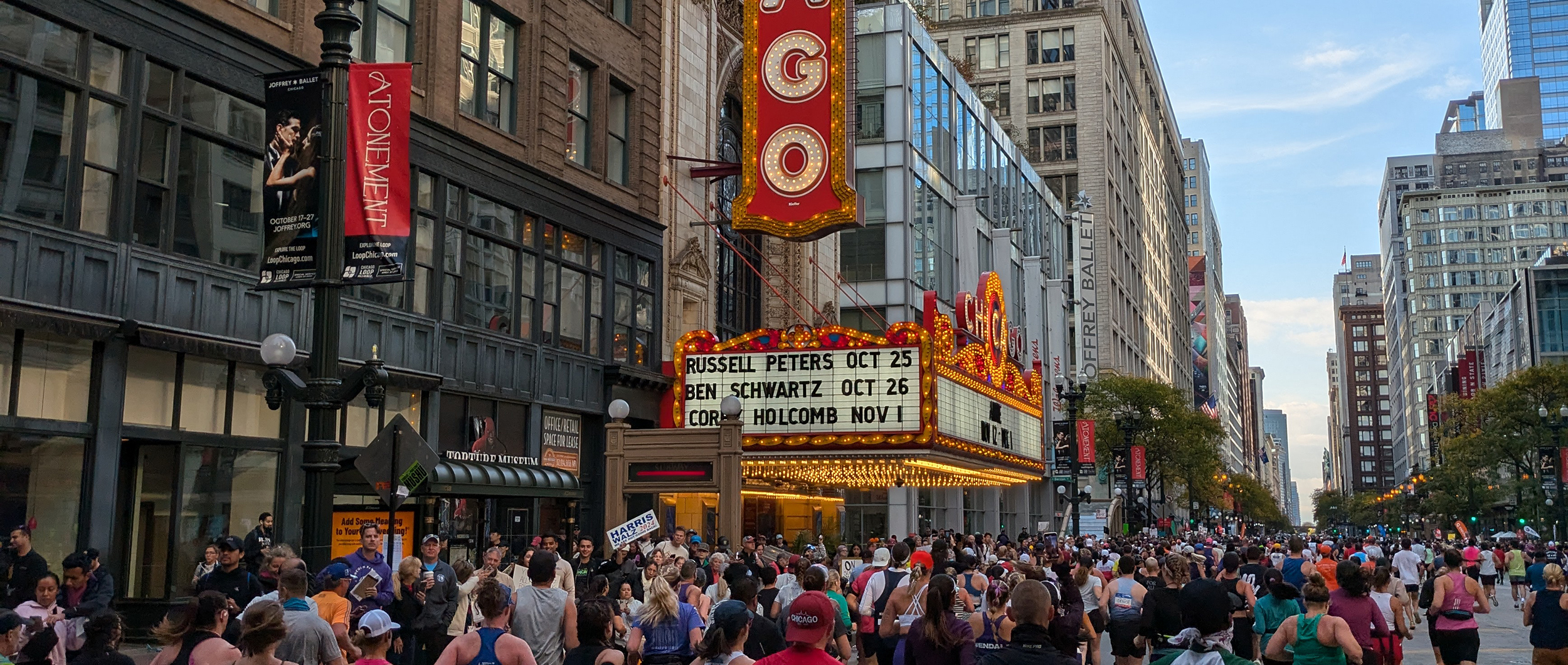
There are many, many best practices that runners can and should deploy when they are running a marathon. However, each individual race presents unique elements and challenges to its runners. The Bank of America Chicago Marathon in Chicago, Illinois isn’t any different. Here are our best race day tips for running the Chicago Marathon!
(If you’re interested in reading Coach Laura’s first-hand account of running the Bank of America Chicago Marathon, please read her race report. And if you’re seeking some guidance in your training for the Chicago Marathon, be sure to check out our Chicago Marathon Training Plans!)
- Purchase inexpensive sweatpants and a sweatshirt at a thrift store or somewhere like Wal-Mart to wear over your race outfit before the race starts. There will be bins to collect any clothing you no longer want at the race start; these items are donated to charity after the race.
- Take public transportation to the race start/corral area. All of the public transportation in Chicago runs extra hours on race day to help runners get to the start easily. Arrive early so you can use the portable restrooms before the lines are very long and so you can find a spot to sit down in your corral section to rest your legs before the race starts.
- Hydration vests, high-capacity hydration vessels, and backpacks of any kind are not allowed at the Chicago Marathon. If this is something you typically train with, be sure to practice with alternative hydration vessels that are allowed at this race. Also be sure to train with the hydration options that are going to be available on-course since you will most likely be unable to provide all of your own hydration throughout the race due to the limitations on what you’ll be able to carry with you.
- There is a blue line painted on the course that is the official measurement of 26.2 miles for the course. Running along this line will allow you to run as close to 26.2 miles as possible. As such: Try to follow/run on this line as much as possible throughout the race. It's very easy to add a lot of mileage (an extra 1-2 miles isn’t unusual!) if you weave in and around other runners on the course and don’t run the corners using the shortest path available.
- There are many, many grated metal bridges throughout the course. The race organizers lay down carpets over a majority of the bridges, but there will be parts of the bridges that are exposed on the sides. Run on the carpets as much as possible; the gaps in the grates are large and require a lot of balancing without the carpets. This adds up to be a lot of strain on the body over the course of the race, and the carpets really help alleviate this.
- If you will have friends and family cheering for you in Chicago, coordinate with them ahead of time to decide which side of the course they should wait for you on (“runner’s left” or “runner’s right) so you can be sure to be running on that side of the course during the race. As mentioned earlier, the course is very crowded and there are also millions of spectators that come out to cheer runners on during the race. Discussing this ahead of time with your family and friends will give you all the best chance of being able to see each other.





.svg)

